A food product can taste balanced on the day it is made and noticeably different weeks later. The aroma may become weaker, a bright top note may disappear, or an unfamiliar oxidized, stale or unbalanced note may emerge.
These changes do not always mean that the original flavor dosage was wrong. They may result from volatile loss, oxidation, interaction with the product base, packaging permeability, temperature fluctuation or a combination of several factors.
The right response is therefore not to increase the flavor immediately. A controlled storage evaluation should first determine what changed, when it changed and which part of the product system is responsible.
1. Separate Flavor Loss from Flavor Change
Flavor loss and flavor change are related, but they are not the same problem.
Flavor loss means that the intended character becomes less noticeable. The product may still taste clean, but the aroma impact, identity or finish is weaker than at the initial evaluation.
Flavor change means that the balance or character has shifted. A fresh fruit note may become cooked, a creamy profile may seem flatter, or an oxidized, cardboard-like, metallic or stale note may appear.
This distinction matters because adding more flavor can sometimes restore impact, but it cannot reliably correct oxidation, packaging migration or an unstable product base. In some cases, a higher dosage may make the imbalance more obvious.
2. Understand the Role of Volatility and Aroma Partitioning
Many aroma compounds are volatile by design. They must move from the food into the headspace and then reach the nose before they can be perceived.
During storage, some of those compounds can gradually escape through the closure, migrate into the package material or redistribute between water, fat, protein, starch and the package headspace. The result may be a lower aroma release even when the total amount of flavor in the product has not disappeared completely.
The product matrix influences which notes are most affected. Fat can retain hydrophobic aroma compounds, proteins may bind certain volatiles, and a change in moisture or texture can alter aroma release during consumption.
This is why storage performance must be checked in the actual product and package-not only in a diluted flavor solution or freshly prepared laboratory base.
3. Check Oxygen Exposure and Oxidation
Oxygen can affect both the added flavor and the food base. Oxidation may reduce desirable aroma compounds while creating new volatile compounds that introduce rancid, paint-like, cardboard-like or stale notes.
The risk depends on the formulation. Products containing fats, sensitive fruit components, vitamins, pigments or naturally oxidation-prone ingredients may change even when the flavor itself is reasonably stable.
Oxygen can enter through the package material, remain in the product or headspace after filling, or be introduced repeatedly after opening. A large headspace and an imperfect seal can increase the product's exposure over time.
When an off-note appears, evaluate the unflavored base as well as the flavored product. If both samples develop a similar defect, the underlying cause may be the base or package rather than the flavor dosage.
4. Control Light, Temperature and Storage Fluctuation
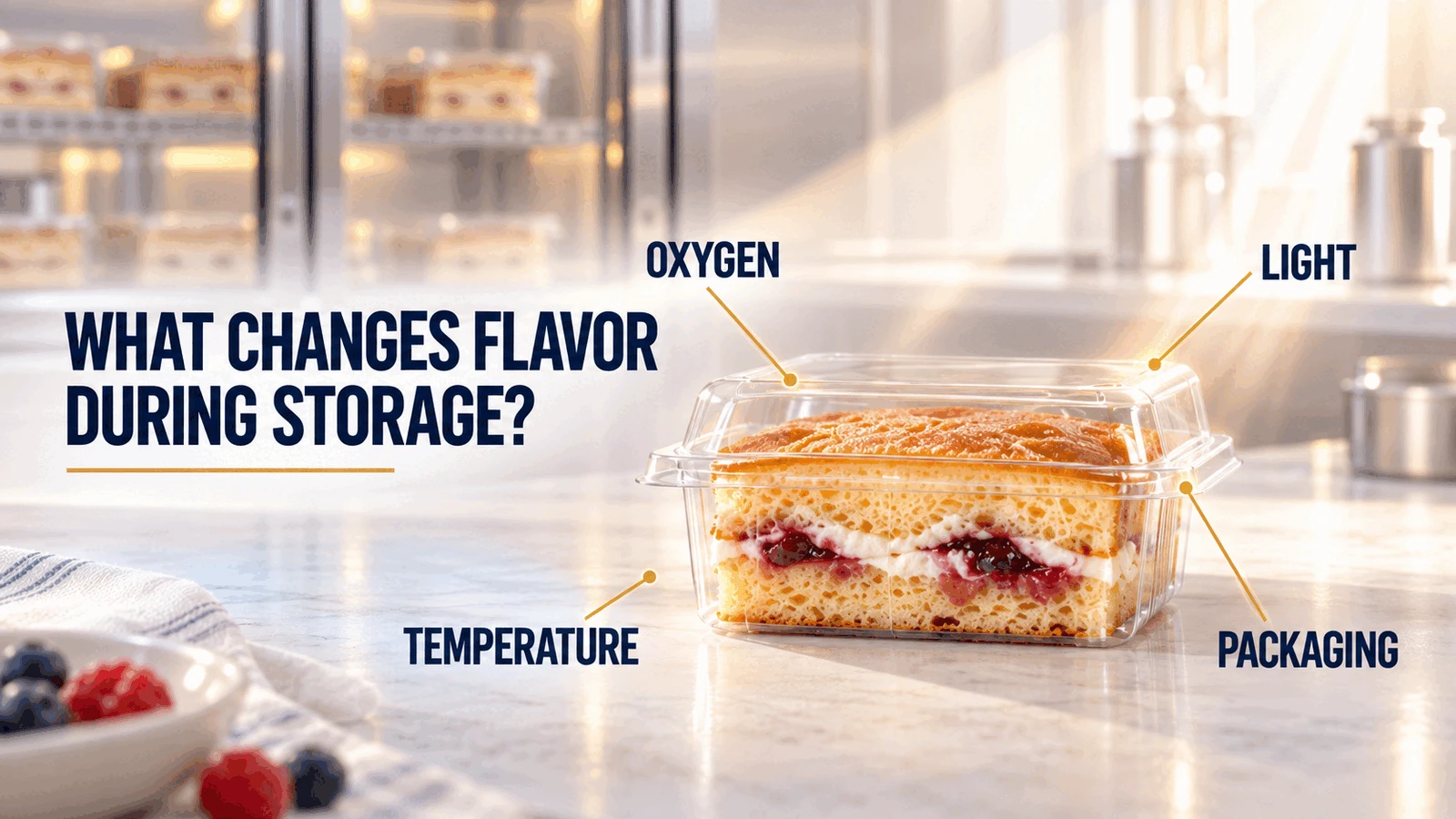
Heat generally accelerates chemical reactions and can increase the rate of aroma loss. Light can promote degradation in light-sensitive formulations, especially when oxygen, pigments or photosensitive ingredients are present.
Repeated temperature changes can be as important as a single high temperature. They may alter headspace pressure, increase movement of volatiles, affect emulsions and change the way the package and closure perform.
Storage testing should therefore include the intended commercial condition and, when appropriate, a controlled accelerated condition. Accelerated testing is useful for identifying risk and comparing samples, but it should not be treated as an automatic substitute for real-time shelf-life validation.
◆ Record the actual temperature range, not only the target setting.
◆ Protect comparison samples from unintended light exposure.
◆ Avoid comparing samples that have experienced different opening or handling histories.
5. Evaluate the Product Base as a Changing System
A finished food continues to evolve after production. Acidity may shift, fat may oxidize, proteins may interact with aroma compounds, moisture may migrate, and texture may become firmer or softer.
These changes can affect flavor perception even when the flavor concentration remains unchanged. For example, increased viscosity may reduce aroma release, while sweetness or acidity changes can make the same flavor seem stronger, weaker or less natural.
Microbiological or enzymatic activity can also create sensory changes. Any unexpected fermentation, gas formation, sourness or spoilage-like note should be investigated as a product safety and quality issue-not covered up with additional flavor.
Use an unflavored control whenever feasible. It provides a reference for deciding whether the observed change begins in the product base, the flavor system or their interaction.
6. Review Packaging, Closure and Headspace
Packaging is part of the flavor system because it controls exposure to oxygen, moisture and light. It can also absorb aroma compounds or contribute an odor of its own.
Do not evaluate only the package material on paper. Test the complete pack: container, liner, closure, seal, fill volume and expected distribution conditions.
Compare packages with the same product batch and fill them under the same conditions. If one pack retains the target profile while another loses top notes, the result may point to barrier performance, sealing or headspace rather than a need for more flavor.
◆ Confirm seal integrity and closure torque or application consistency.
◆ Check whether package odor is detectable in an empty control pack.
◆ Record fill level and headspace consistently across trials.
◆ Include the final commercial package in the validation-not only laboratory containers.
7. Consider Residual Effects from Processing
Storage stability is influenced by what happened during production. High heat exposure, long holding times, strong shear or late exposure to air may reduce the product's initial reserve of delicate aroma notes.
A sample can still smell acceptable immediately after production but change quickly because sensitive components have already been stressed. Differences between laboratory and factory equipment may make this problem appear only during scale-up.
Document the flavor addition point, product temperature, mixing time, hold time before filling and cooling profile. Without this information, a storage failure may be incorrectly blamed on the flavor or package.
8. Evaluate at More Than One Time Point
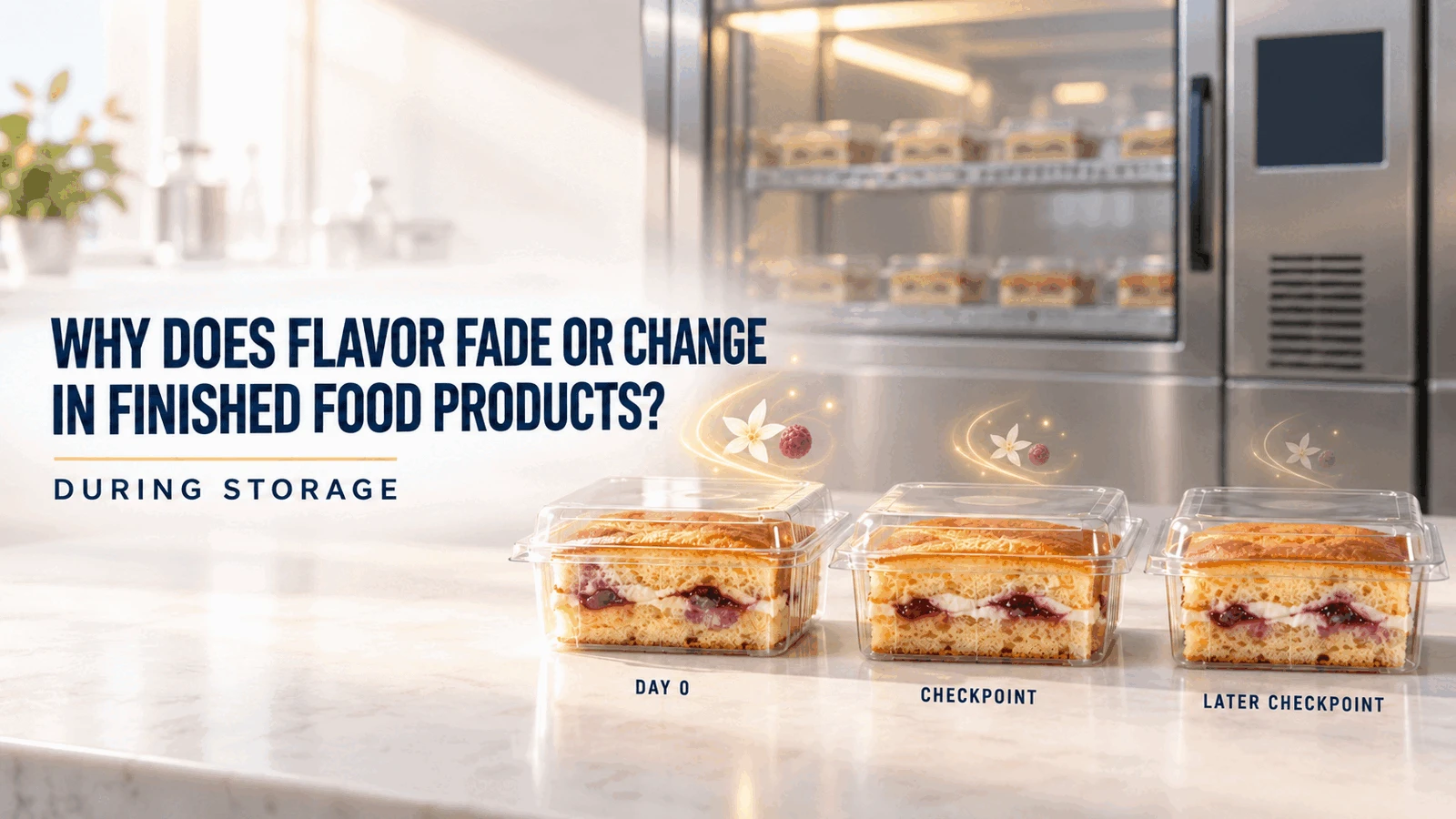
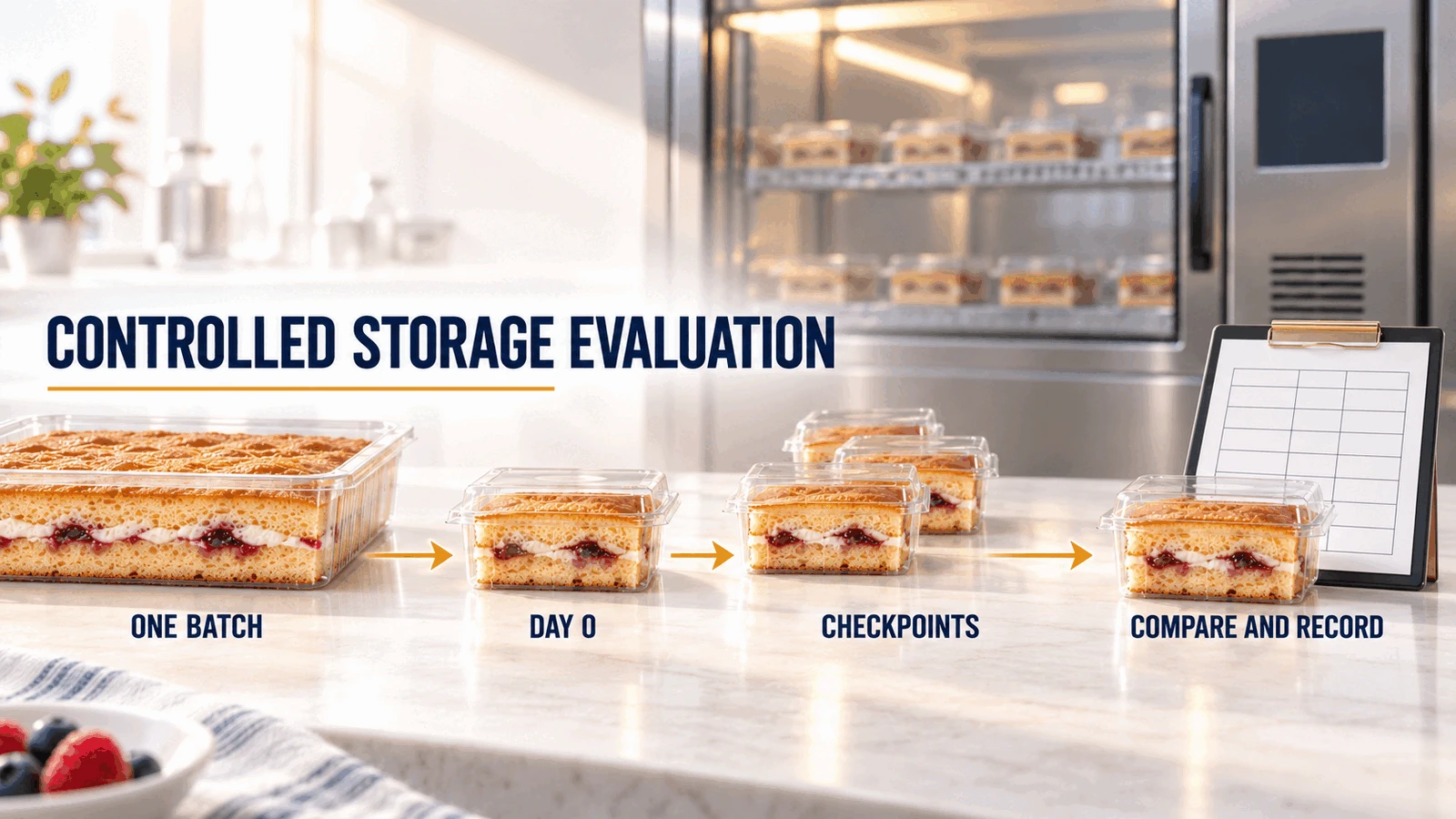
A Day 0 result describes initial quality, not storage stability. At minimum, a trial needs an initial reference and several later checkpoints selected according to the product's intended shelf life and risk profile.
Use the same evaluation method at every time point. Samples should be served at a consistent temperature and in the same type of vessel, preferably with blind codes and a defined comparison order.
Record intensity and character separately. A simple score for overall liking may miss an important change, such as the loss of a fresh top note while sweetness and total aroma remain strong.
◆ Target aroma identity and overall impact
◆ Top-note freshness, body and finish
◆ Off-notes such as oxidized, stale, metallic, cooked or package-like character
◆ Appearance, texture, pH and other product-specific quality indicators
9. Design a Controlled Storage Trial
A useful trial changes one major factor at a time. If flavor dosage, process, package and storage temperature all change together, the final result cannot show which factor caused the difference.
Prepare enough units from one homogeneous batch for all planned checkpoints. Avoid reopening the same package repeatedly unless the purpose is specifically to simulate consumer use after opening.
A practical test may compare the current formulation with one controlled alternative, such as a different addition point, a more protective package or a flavor option designed for the application. Keep the dosage constant unless dosage itself is the variable under investigation.
Retain a properly stored reference sample where practical. The reference does not replace Day 0 records, but it can help the team judge whether a change is caused by the test condition or normal batch variation.
10. Diagnose the Cause Before Changing Dosage
Increasing dosage is only one possible corrective action. It may be appropriate when the target character remains clean but consistently falls below the required intensity throughout storage.
It is less likely to solve a problem when the flavor changes direction, an off-note grows over time, or one package performs differently from another. In those cases, the investigation should focus on formulation compatibility, processing, oxygen control, light protection, package barrier or closure integrity.
The most reliable decision is based on a pattern across samples and time points-not on a single sensory impression.
Diagnostic Guide
| Observed change | Possible causes | What to check first |
|---|---|---|
| Clean but weaker aroma | Volatile loss, package absorption, low barrier or reduced matrix release | Package comparison, headspace, closure, viscosity and intensity by note |
| Fresh note becomes cooked or dull | Heat history, oxidation or loss of delicate top notes | Addition point, processing temperature, hold time, oxygen and light exposure |
| Rancid or cardboard-like note | Oxidation of fat or sensitive ingredients | Unflavored base, oxygen exposure, package barrier and raw-material condition |
| Only one pack format changes | Barrier, seal, liner, closure or packaging interaction | Same-batch package trial and seal integrity |
| Flavor changes after opening | Growing headspace, repeated oxygen entry or handling temperature | Simulated-use protocol versus unopened control |
| Factory sample changes faster than lab sample | Scale-up heat, shear, hold time, aeration or filling conditions | Matched process records and pilot or production confirmation |
Final Storage Evaluation Checklist
✓ Define whether the problem is loss of intensity, change of character or development of an off-note.
✓ Use the actual product base, production process and commercial package.
✓ Prepare an unflavored base control when feasible.
✓ Keep dosage, batch, fill level and handling conditions consistent across comparisons.
✓ Record oxygen exposure, headspace, light, temperature and opening history.
✓ Evaluate at Day 0 and at planned checkpoints relevant to the intended shelf life.
✓ Assess aroma character, intensity, top notes, body, finish and off-notes separately.
✓ Compare packaging and process variables before increasing flavor dosage.
✓ Confirm the selected solution at pilot or production scale.
✓ Use real-time validation for the final commercial shelf-life decision.
Conclusion
Flavor in a finished food product may fade or change during storage because the product is a dynamic system. Aroma compounds can volatilize, migrate or react, while the product base, package, oxygen, light and temperature continue to influence sensory performance.
A higher dosage is not automatically the right solution. The better approach is to compare controlled samples over time, identify the pattern of change and correct the factor that is actually limiting stability.
When dosage, process, package and storage conditions are evaluated together, product developers can make more reliable flavor decisions before commercial production.
Related HiDoo Flavor Solutions
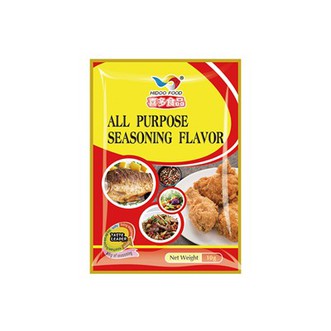
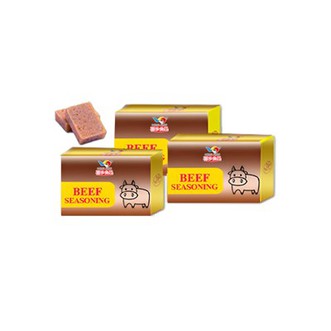
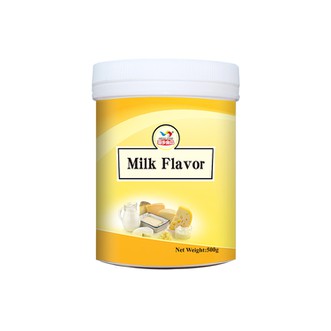
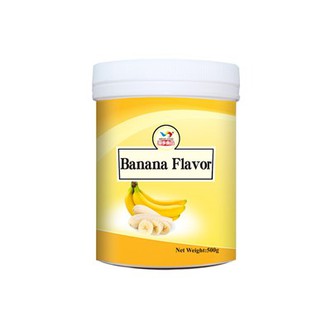
Depending on the application and processing conditions, product developers may evaluate liquid or powder flavor formats across beverage, bakery, confectionery, dairy, savory and seasoning systems. The appropriate option should be confirmed in the customer's actual formulation and package.
Looking for the right flavor solution for your product?
HiDoo provides liquid and powder food flavors, sample support and application guidance for beverage, bakery, confectionery, dairy, savory and seasoning products.
www.hidoofood.com
gary@hidoofood.com