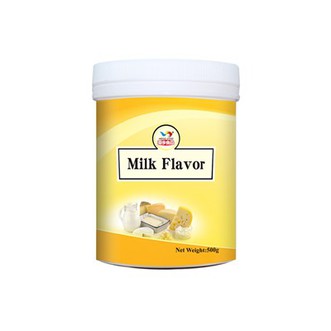
A product can have a strong milk aroma and still feel thin when eaten. Increasing the flavor dosage may make the aroma more obvious without improving the middle of the taste or the finish. A fuller milk flavor depends on the fit between the dairy profile, the product base and the way the product is processed and consumed.
For development teams, the useful question is where the dairy character is missing. Does the product need a clearer milk identity, more cream or butter character, a better balance with sweetness, or a more persistent dairy finish? These are different targets and should be evaluated separately.
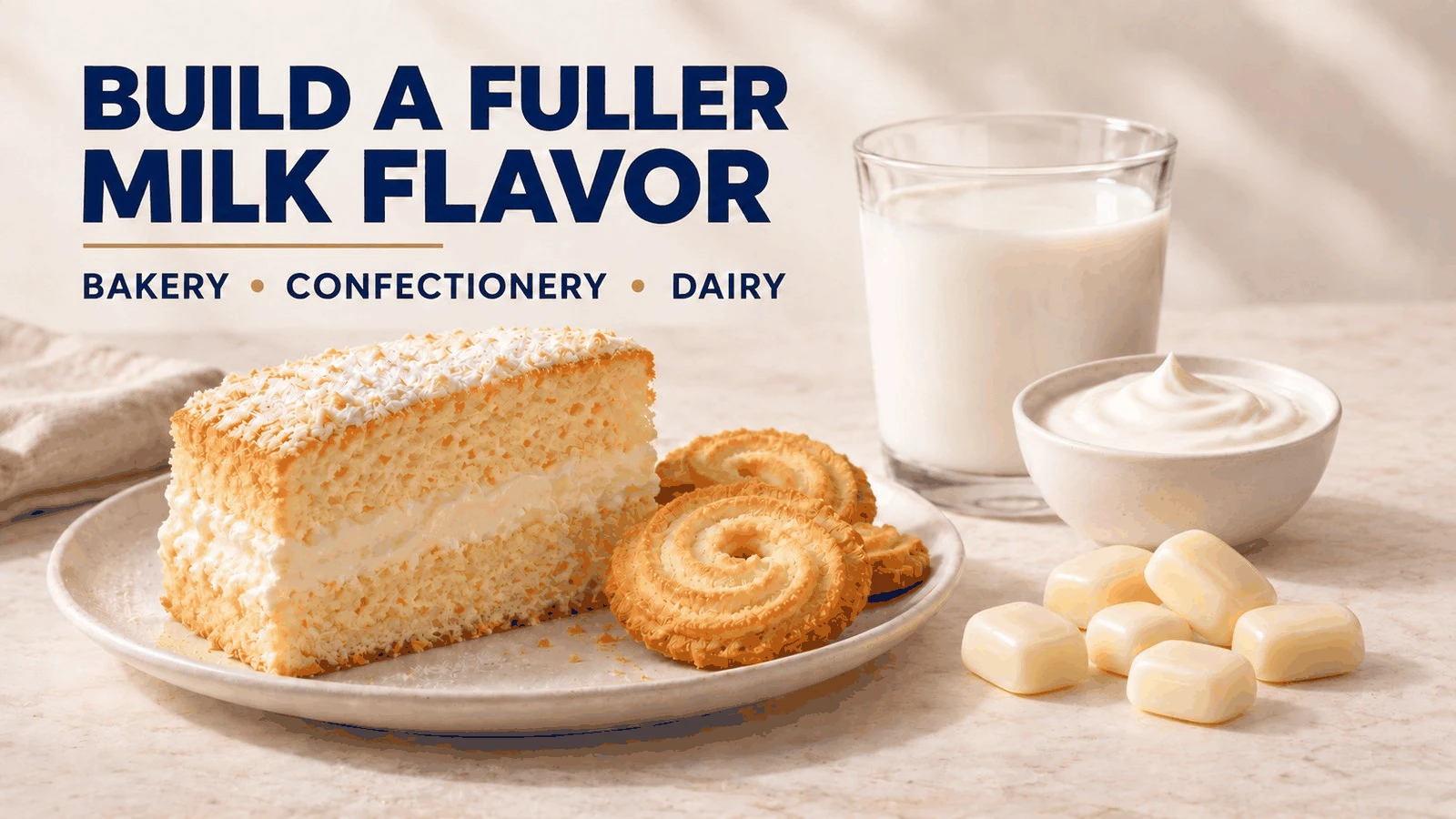
This guide explains how to develop fuller milk flavor in bakery, confectionery and dairy products through profile selection and controlled application trials. The goal is a dairy character that belongs in the finished food and remains acceptable after processing and storage.
1 Define what fuller milk flavor means
Describe the target in sensory terms before selecting a sample. Milk identity, creaminess, buttery character, cooked milk character and persistence can each contribute to the result, but they are not interchangeable. A clean milk drink and a butter biscuit should not be judged against the same dairy reference.
Separate perceived creaminess from physical texture. Aroma can influence the impression of richness, while viscosity, lubrication and mouth coating also depend on the formulation. If the product is physically watery, dry or grainy, a stronger milk aroma alone will not correct that texture.
Use an agreed finished-product reference. Ask evaluators to score milk identity, creamy character, overall balance and dairy aftertaste separately. Record the texture alongside these scores so that a flavor improvement is not confused with a change in thickness.
2 Choose a dairy profile that fits the application
Start with the character the consumer expects from the food. A fresh milk direction may suit a light dairy drink. A cream or butter direction may suit a filling or biscuit. A cooked milk direction may be useful in a milk candy, while yogurt requires a dairy profile that works with its fermented character.
Treat these as trial directions rather than fixed rules. Too much buttery character can make a drink feel heavy; too much fresh top note can seem disconnected from a baked product. Compare candidates in the actual base before deciding which direction is appropriate.
Ask the supplier for samples selected for the intended application. Include the product type, fat and protein sources, sweetness, acidity, process conditions and target reference in the brief. A sample name such as milk or cream is not enough to predict performance.
3 Evaluate the dairy base and supporting ingredients
Prepare the same base without added flavor. Milk powder, whey ingredients, butter, cream, vegetable fat, cocoa and other ingredients already contribute their own sensory character. The added flavor should complement that base rather than compete with it.
Check whether a flat dairy impression is accompanied by stale, oxidized, bitter or other unwanted notes. Confirm ingredient quality before optimizing aroma. Flavor must not be used to conceal spoilage or make unsuitable raw materials acceptable.
When ingredients change, repeat the application comparison. Replacing a milk powder or fat source can alter both the underlying taste and the way the selected flavor is perceived. A successful dosage in the old formula should not automatically become the specification for the new one.
4 Balance sweetness with dairy character
Evaluate the milk flavor at the intended sweetness level. A sweet reference and an unsweetened trial can create misleading differences in perceived dairy richness. Keep sweetness constant while comparing profiles, then test sweetness adjustments separately.
Increasing sweetness may support a dessert-like dairy impression, but excessive sweetness can hide detail or produce a candy-like result where a clean milk profile is wanted. The suitable balance depends on the product and the target consumer.
In reduced-sugar products, check the timing and aftertaste of the sweetener system as well as sweetness intensity. A delayed sweetness or bitter finish can interfere with the dairy impression. Correct that interaction through controlled trials rather than increasing milk flavor to compensate.
5 Account for fat protein and texture
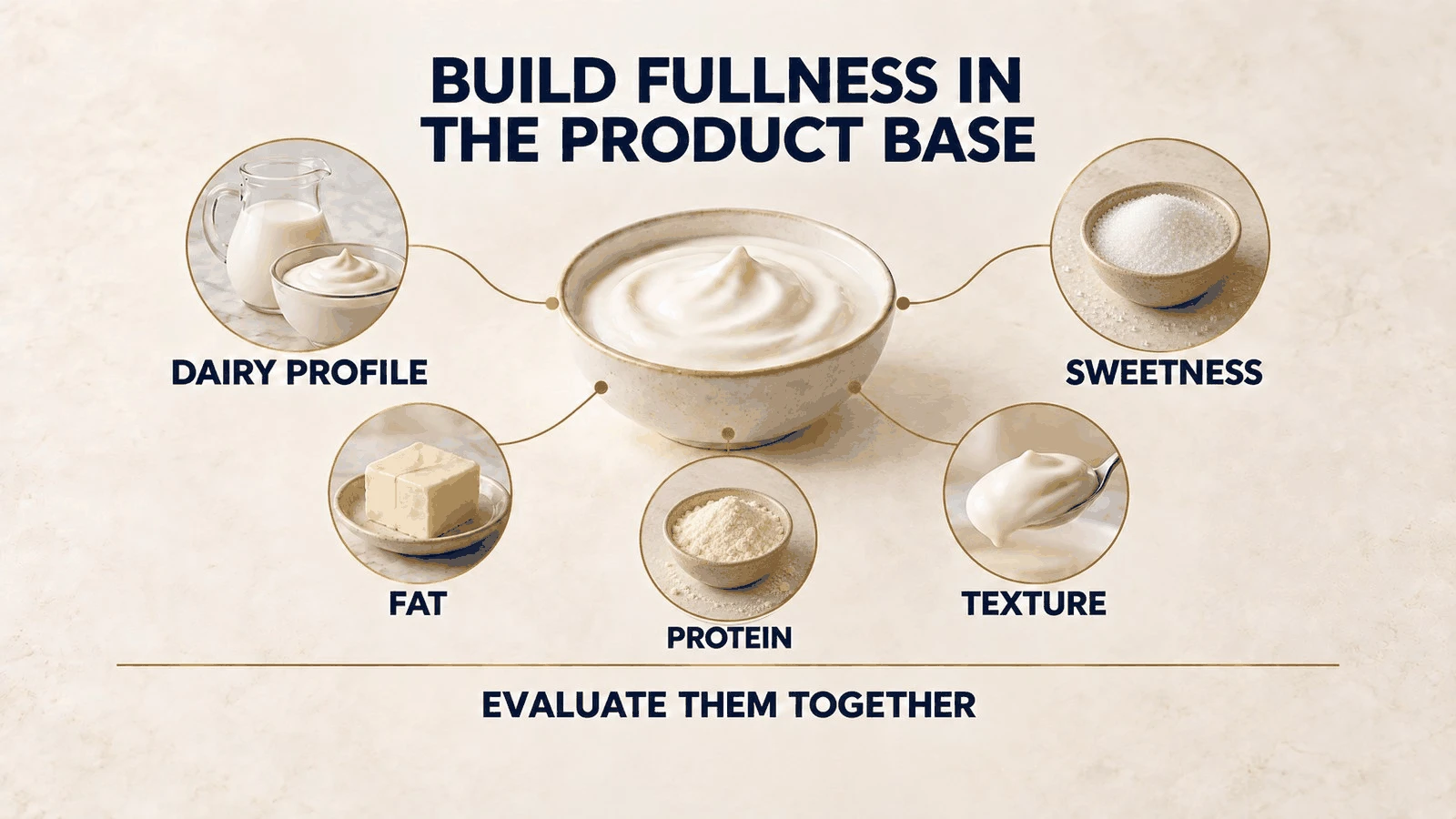
Fat and protein affect the retention and release of aroma compounds. The direction and size of the effect depend on the compounds and the food matrix. A milk flavor that is clear in a simple test solution may feel softer or develop differently in a cream filling or protein-rich drink.
Do not assume that adding fat always increases perceived milk intensity. Likewise, making a product thicker does not necessarily make its dairy flavor fuller. Assess aroma, taste and texture together in the intended formulation.
If the base needs a texture adjustment, test it as a separate variable. Stabilizers, emulsifiers and changes in solids should serve a defined formulation purpose. Once the base is acceptable, reconfirm the flavor profile and dosage in that revised base.
6 Match the flavor format to mixing and processing
Choose a liquid or powder format according to the production system and the supplier specification. Check compatibility with the phase in which the flavor will be introduced, the available mixing equipment and the required dispersion procedure.
Powder format does not automatically mean better heat resistance, and liquid format does not automatically mean better dispersion in every product. Carrier composition, solubility, delivery system and handling instructions all matter. Confirm performance with the actual sample.
Use an appropriate premix when recommended and confirm uniform distribution. Take samples from different batch positions. An uneven result can make one portion seem creamy and another weak, even when the average addition is correct.
7 Develop milk flavor for bakery products
Evaluate the fully baked and cooled product. A dough or batter tasting cannot establish how much dairy character will remain after baking. Record the actual baking conditions, product size and cooling procedure so comparisons are meaningful.
For a biscuit or cake, judge whether the dairy note integrates with cereal, egg, toasted or cocoa notes. A supporting butter or cream direction may be useful, but it should not overwhelm the intended identity. For a filling, test the filling separately and then taste it with the finished shell or cake.
Use the intended package for follow-up evaluation. Check whether the dairy impression remains balanced after the product has equilibrated and at relevant storage points. A strong aroma immediately after baking may not describe what the customer experiences later.
8 Develop milk flavor for confectionery
Distinguish the targets for hard candy, chewy milk candy, caramel and chocolate-based confectionery. Their cooking conditions, water content and eating behavior differ. A profile selected for one format needs a new application trial before transfer to another.
Where cooked milk or caramel character is intended, assess how the added dairy note works with the character already produced by the process. Excessive cooked or buttery notes can become heavy and obscure the intended milk identity.
Compare addition stages within the permitted process. Follow the supplier guidance and maintain safe handling and product requirements. Evaluate the cooled, formed product through the full eating period, including the finish after swallowing.
9 Develop milk flavor for dairy products
Milk drinks, yogurt, dairy desserts and ice cream need separate targets. A yogurt profile must work with acidity and fermentation notes; an ice cream profile must be judged at its intended serving temperature and as it melts. A milk drink needs a balance appropriate to its solids and fat level.
For heat-treated products, reproduce the actual treatment and evaluate after cooling. For fermented products, confirm whether the flavor is intended for addition before or after fermentation and test the approved process. A late addition should not be introduced without checking the product hygiene requirements.
When fat, sugar or protein levels change, repeat the comparison. A flavor adjustment can help rebuild the dairy impression, but it does not replace the nutritional contribution of milk ingredients or guarantee physical stability.
10 Compare profiles before fine tuning dosage
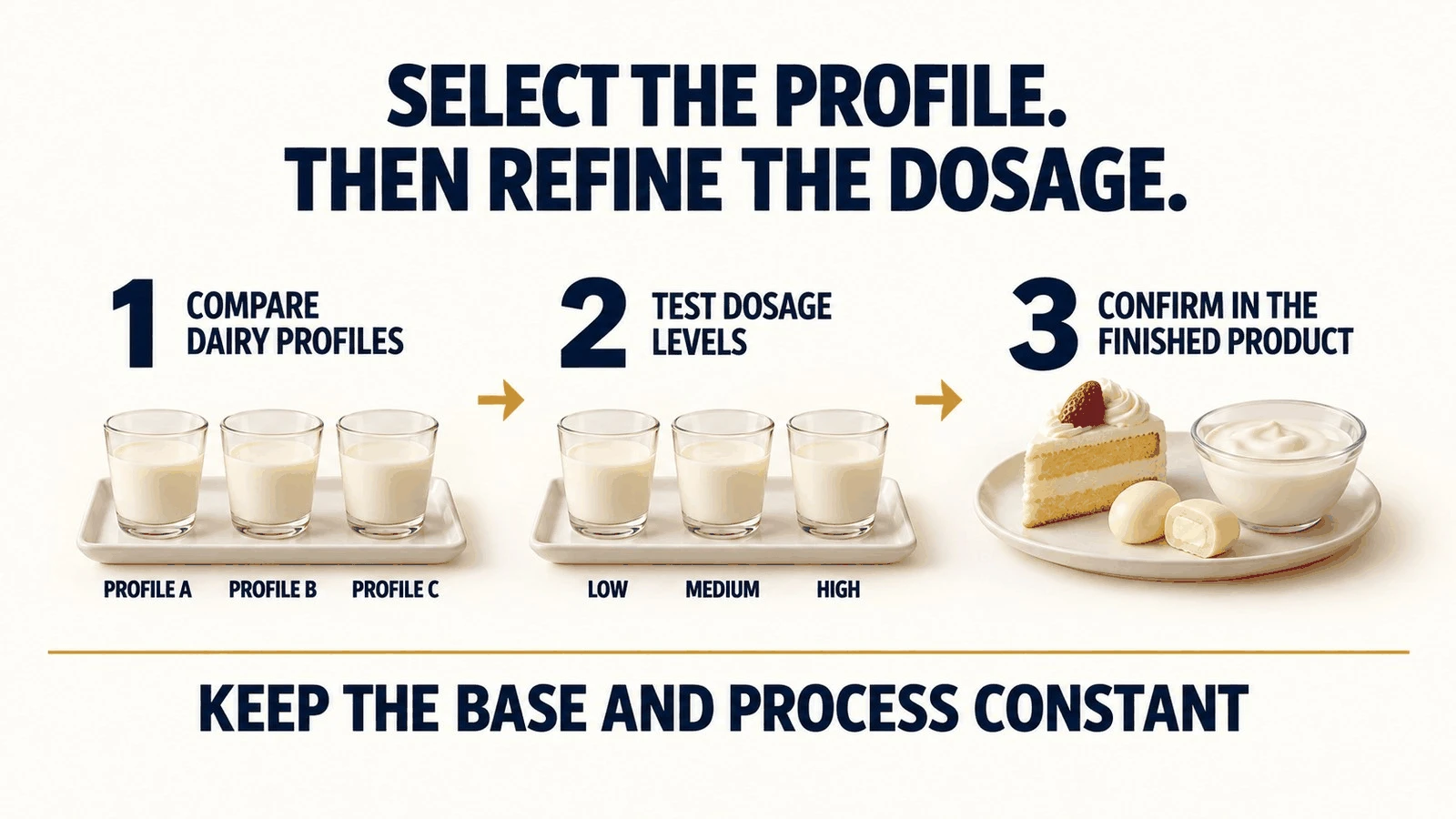
Use two rounds of trials. First compare candidate dairy profiles in the same base at application-appropriate levels recommended by the supplier. Include the current formula or an agreed reference. Select the direction that gives the best product fit.
Then compare low, medium and high levels of the selected candidate within its recommended range. Keep the base, batch size, mixing, process and sample age constant. Different samples may have different concentrations, so equal addition percentages are not proof of an equivalent sensory comparison.
Record first impact, middle of the taste and dairy finish. Select the level that improves the missing part without creating excessive buttery character, a perfumy impression or an unpleasant lingering note. Numerical trial levels should be set from the actual product specification rather than a universal milk-flavor dosage.
11 Confirm the result in production and storage
Confirm the selected formula in a pilot or controlled production trial. Check actual mixing uniformity, heating and cooling behavior and the addition stage. Compare samples from different batch positions with the approved laboratory reference.
Evaluate at the intended serving temperature after processing, after equilibration and at relevant storage intervals in the intended package. Keep aroma, texture and aftertaste observations separate. A fuller fresh sample is only useful if the finished product remains acceptable during realistic use.
Before approval, confirm that the dairy target is clear, the base quality is acceptable, the flavor is dispersed uniformly, the process has been reproduced and the improvement is repeatable. Also obtain the product-specific ingredient, allergen and labeling information needed for the intended market; do not infer these from a milk or cream flavor name.
12 Conclusion
A fuller milk flavor begins with a clear sensory target and an acceptable product base. The selected dairy profile must work with sweetness, fat, protein and texture, then remain appropriate through processing and the way the food is eaten.
Choose the profile first, refine its dosage through controlled comparisons and confirm the result in the finished product. This gives development teams a practical route to improving dairy character without relying on repeated increases in aroma strength.
HiDoo provides liquid and powder food flavors, sample support and application guidance for bakery, confectionery, dairy, beverage, savory and seasoning products. Share your application, formula background, process conditions and target dairy character to help identify suitable samples.
www.hidoofood.com
gary@hidoofood.com