A flavor that smells strong before production may become weak after baking. Another flavor may work well in a cake but taste unbalanced in a biscuit, cookie or bread.
This happens because flavor performance in bakery products is affected by more than the flavor itself. Heat exposure, product composition, dosage, mixing and storage can all influence the final result.
For bakery manufacturers, the objective is not simply to add more flavor. It is to select a suitable flavor and make it perform effectively in the finished product.
The following five factors can help improve flavor performance in bakery applications.

Five Key Factors
| Factor | Why It Matters |
|---|---|
| Flavor Form | Powder and liquid flavors behave differently during mixing and processing |
| Baking Conditions | Temperature, time and product size can affect flavor retention |
| Product Base | Fat, sugar, moisture and other ingredients influence flavor perception |
| Dosage | Too little flavor may become weak, while too much may taste artificial |
| Final Evaluation | Flavor should be evaluated after baking, cooling and storage |
1. Choose the Right Flavor Form
Both powder and liquid flavors can be used in bakery products, but the appropriate form depends on the formulation and production process.
Powder flavors are often convenient for dry premixes, flour-based formulations, biscuits, cookies and products that require direct blending with other powdered ingredients.
Liquid flavors are commonly used in cakes, high-moisture batters, creams, fillings and formulations containing other liquid ingredients.
However, flavor form alone does not determine performance. A powder flavor is not automatically more heat-resistant than every liquid flavor, and a liquid flavor is not automatically stronger.
The flavor should always be tested in the actual product and under the manufacturer's normal processing conditions.
For a broader comparison, read:
Powder Flavor vs. Liquid Flavor: Which One Is Right for Your Application?
2. Consider Baking Temperature and Time
Different bakery products are exposed to different processing conditions.
A thin biscuit baked for a short time does not experience the same heat exposure as a large cake, a loaf of bread or a filled pastry. Oven temperature, baking time, product size, moisture loss and surface exposure can all affect the aroma remaining in the finished product.
Some volatile flavor notes may be reduced during baking. At the same time, fermentation, caramelization and Maillard reactions can create baked, roasted, nutty or caramel-like notes.
The selected flavor should therefore complement the aroma generated naturally during baking.
For example:
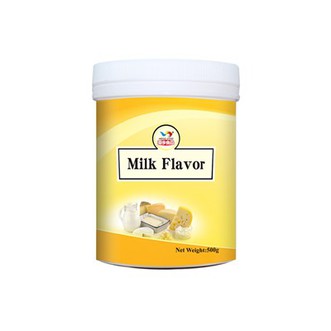
● Milk and vanilla flavors can strengthen creamy and sweet notes in cakes and biscuits.
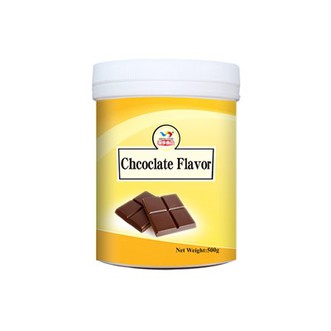
● Chocolate flavor should remain balanced with cocoa, sugar and baked notes.
● Banana and other fruit flavors may require careful adjustment to retain a fresh and recognizable profile after heating.
● Corn flavor may interact with the product's natural cereal and toasted notes.
Whenever possible, flavor trials should use the same temperature, baking time and product size planned for commercial production.
3. Match the Flavor to the Product Base
The same flavor can perform differently in different bakery formulations.
Fat can contribute to a fuller flavor impression and influence the release of certain aroma compounds. Sugar affects both sweetness and the perceived intensity of milk, vanilla, chocolate and fruit notes. Moisture also affects aroma release.
Other ingredients-including flour, cocoa, milk powder, eggs, leavening agents and emulsifiers-may strengthen or suppress particular flavor characteristics.
For this reason, smelling a flavor directly from its container or evaluating it only in water cannot accurately predict its performance in a finished bakery product.
Flavor selection should consider:
● Product type
● Fat and sugar levels
● Moisture content
● Use of cocoa or milk solids
● Fermentation or leavening system
● Target taste profile
● Expected shelf life
A light vanilla profile, for example, may suit a delicate cake. A richer or creamier vanilla profile may be more appropriate for biscuits, cookies or dairy-style fillings.
The right flavor should support the product base rather than compete with it.
4. Optimize the Dosage
Using more flavor does not always produce a better result.
If the dosage is too low, the flavor may become weak after baking or gradually fade during storage. If the dosage is too high, it may taste artificial, harsh or unbalanced while increasing production cost unnecessarily.
A practical approach is to prepare low-, medium- and higher-dose samples while keeping the base formulation and processing conditions unchanged.
All samples should be compared after baking and complete cooling.
The objective is to identify the lowest effective dosage that provides the required flavor intensity, balance and retention.
A supplier's recommended dosage should be used as a starting range. The final dosage must be confirmed in the customer's own product because formulations and processing conditions vary.
5. Evaluate the Finished Product
Flavor should not be approved only by smelling the raw dough or tasting the product immediately after it leaves the oven.
A hot bakery product releases aroma differently from a cooled product. Flavor intensity and balance may change after cooling, packaging and storage.
A complete evaluation should include:
● Raw dough or batter
● Freshly baked product
● Fully cooled product
● Packaged product
● Product at selected points during shelf life
Manufacturers should evaluate aroma intensity, flavor identity, sweetness balance, aftertaste, interaction with baked notes and flavor retention during storage.
The final decision should be based on the product as the consumer will actually eat it.
A More Reliable Bakery Flavor Development Process
Improving bakery flavor performance requires a systematic approach:
1. Define the target flavor profile.
2. Select suitable powder or liquid flavor samples.
3. Test several dosage levels in the actual formulation.
4. Bake under normal production conditions.
5. Evaluate the product after cooling and during storage.
6. Adjust the flavor profile or dosage before commercial production.
This process helps reduce unnecessary trial and error and allows manufacturers to select flavors based on finished-product performance rather than aroma strength before baking.
Bakery Flavor Support from HiDoo
HiDoo provides powder and liquid flavors for breads, cakes, biscuits, cookies, creams and bakery fillings.
Available profiles include milk, vanilla, creamy vanilla, banana, pineapple, strawberry, chocolate, corn and other customized sweet flavors.
We support food manufacturers and distributors with:
● Flavor selection
● Samples for evaluation
● Dosage and application guidance
● Customized flavor development
● OEM manufacturing
● Private-label services
Conclusion
Improving flavor performance in bakery products requires attention to the flavor form, baking conditions, product base, dosage and evaluation method.
The most suitable flavor is not necessarily the one that smells strongest before production. It is the one that delivers the intended taste after baking, cooling, packaging and storage.
Related reading:
How to Improve Flavor Performance in Beverage Applications
Looking for a suitable flavor for your bakery product?
Tell HiDoo your product type, target flavor profile and processing conditions. We can help you select and evaluate suitable samples.
Contact us on WhatsApp:
https://wa.me/8617753251168