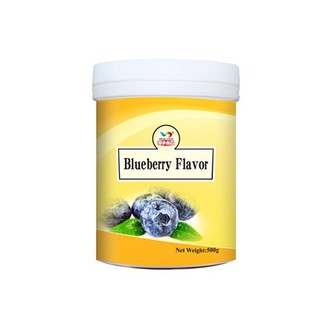
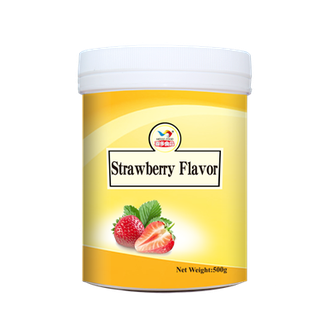
A food flavor sample may smell strong, clean and attractive in the bottle, yet perform very differently in a finished product. Fat, sugar, protein, acidity, salt, heat, pressure, mixing, cooling and storage can all change how a flavor is released and perceived.
For that reason, a reliable decision cannot be based on bottle aroma or a quick test in water. The sample must be evaluated in conditions that are as close as possible to the final application.
Before beginning, the evaluation team should be able to answer three questions: What flavor profile is required? What processing conditions will the product experience? What result should remain after production and storage?

1. Define the Target Before Testing
The first step is to define what the project actually needs. "Stronger" is not a complete target. A useful target should describe the desired profile, intensity, application and performance.
- Flavor direction: natural, fresh, ripe, creamy, roasted, juicy, cooked or another specific character.
- Application: beverage, bakery product, confectionery, dairy product, snack seasoning, sauce or another food system.
- Processing conditions: heating temperature and time, baking, extrusion, homogenization, drying, freezing or other critical steps.
- Performance target: top-note impact, body, aftertaste, masking effect, heat resistance or storage stability.
A clear target makes comparison more objective and gives the flavor supplier useful technical direction.
2. Test in a Product Base Close to the Final Formula
The same flavor can behave very differently in water, milk, oil, syrup, dough or seasoning powder. A sample should therefore be tested in a base that closely represents the final product.
Whenever possible, keep the main formula conditions consistent, including sugar level, fat content, protein content, acidity, salt level, emulsifier system and solids content. If the final formula is not yet fixed, use the closest available model base and record all conditions clearly.
A water test can help with an early aroma check, but it should not be used as the final basis for selection unless the intended product is itself a water-based beverage.
3. Keep a Blank Sample and a Reference Sample
Every evaluation should include a blank sample without added flavor. The blank shows the natural background of the base and helps the team identify what the flavor is actually contributing.
If possible, also include a reference sample. This may be the current production formula, a previously approved sample or a target market product. The reference provides a stable benchmark for profile, intensity and overall fit.
All samples should be coded and presented under the same conditions to reduce expectation bias.
4. Test More Than One Dosage Level
A single dosage cannot show the full performance range of a flavor. Prepare a small dosage gradient around the supplier's recommended starting point.
For example, test a low, medium and high level while keeping the base and process unchanged. This helps reveal whether the flavor develops smoothly, becomes unbalanced at higher levels or disappears too quickly at lower levels.
Record dosage precisely by weight or volume. Avoid adding flavor "by eye," because even a small difference can affect the conclusion.
5. Simulate the Actual Production Process
A flavor that performs well before processing may weaken, change direction or create an unwanted aftertaste after production. Laboratory evaluation should reproduce the most important process steps whenever possible.
- Add the flavor at the same stage planned for production.
- Use realistic mixing time, shear and temperature.
- Reproduce heating, baking, extrusion, homogenization, cooling, freezing or drying conditions where relevant.
- Use packaging that is reasonably close to the final format when packaging interaction may matter.
The evaluation should focus on the finished sample after processing, not only on the unprocessed mixture.
6. Evaluate at More Than One Time Point
Flavor perception changes as a product cools, rests and ages. A sample that seems suitable immediately after production may become weaker, sharper or less balanced later.
Evaluate the product at practical checkpoints, such as:
- immediately after preparation or processing;
- after complete cooling or equilibration;
- after 24 hours, when relevant;
- after selected storage intervals that reflect the expected shelf life.
Use the same serving temperature and preparation method at each checkpoint. For products such as baked goods, beverages, dairy products and seasonings, these time-based checks are often essential.
7. Record Results with Consistent Criteria
General comments such as "good," "weak" or "not suitable" are difficult to act on. Use the same evaluation criteria for every sample.
- Profile direction: Does it match the intended character?
- Intensity: Is it too weak, appropriate or too strong?
- Compatibility: Does it work naturally with the product base?
- Retention and aftertaste: Does the flavor remain pleasant after swallowing?
- Process stability: Does it survive the key production steps?
- Overall fit: Does it support the final product concept?
A simple scoring sheet and written comments make it easier to compare samples and repeat the test.
8. Change Only One Major Variable at a Time
If the formula, dosage, process and flavor sample all change at the same time, the result becomes difficult to interpret. Keep the test controlled and change one major variable per round whenever possible.
For example, first compare several flavor samples at the same dosage. Then optimize the dosage of the best candidate. After that, confirm performance under the intended process and storage conditions.
This stepwise approach reduces confusion and avoids rejecting a suitable flavor because of an unrelated formula or process change.
9. Confirm the Result in Pilot or Full-Scale Production
A laboratory sample is an important screening tool, but it cannot reproduce every condition in a production line. Equipment scale, mixing efficiency, heat transfer, holding time, ingredient order and packaging speed may all affect flavor performance.
Before final approval, verify the selected flavor in a pilot batch or controlled production trial. Check that the same profile and intensity can be reproduced consistently and that no new stability issue appears at scale.
10. Give the Supplier Useful Technical Feedback
Clear feedback helps a flavor supplier make a faster and more accurate adjustment. Instead of saying only "too weak" or "not right," describe the application, formula conditions, dosage, process and the exact difference from the target.
Useful feedback may include comments such as:
- the top note is correct, but the body becomes weak after heating;
- the flavor is strong enough, but the profile is too candy-like;
- the aroma is suitable before baking, but retention is insufficient afterward;
- the flavor matches the target at the medium dosage, but the aftertaste is too long.
When the supplier understands the real application result, sample revision becomes more efficient.
Final Evaluation Checklist
- Has the target flavor profile been defined clearly?
- Was the sample tested in the actual or closest product base?
- Were blank and reference samples included?
- Were multiple dosage levels compared?
- Was the real production process simulated?
- Was performance checked after cooling and storage?
- Were results recorded using consistent criteria?
- Was the selected sample verified in pilot or production scale?
Conclusion
A food flavor sample is not selected at the bottle opening. It is verified in the real product, through the real process and under real storage conditions.
The most reliable choice is the sample that delivers the intended profile, intensity, stability and overall fit in the final application-not simply the sample that smells strongest in concentrated form.
HiDoo Food provides liquid and powder food flavors, sample support, custom flavor development and application support for food manufacturers.
Website: www.hidoofood.com
Email: gary@hidoofood.com